
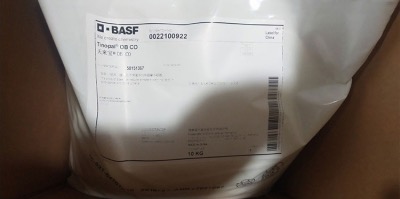
Tinopal OB CO—also known as Optical Brightener OB—is a high-performance fluorescent whitening agent widely used in paints, coatings, adhesives, and printing inks. With strong bluish fluorescence and excellent thermal and chemical stability, Tinopal OB is a preferred additive for applications demanding superior brightness, improved whiteness, and enhanced color brilliance.
This article provides a full technical overview of Tinopal OB CO, including its chemical properties, solubility, spectral characteristics, and recommended application areas across coating and ink systems.
1. Chemical Identity of Tinopal OB CO
- Chemical Name: 2,5-Bis(5-tert-butyl-1,3-benzoxazolyl)thiophene
- Commercial Name(s): Tinopal OB, BASF Tinopal OB-CO
- CAS Number: 7128-64-5
- Molecular Weight: 430.6 g/mol
- Appearance: Yellow crystalline powder
- Density (20°C): 1.26 g/cm³
- Melting Point: 196–203°C
Tinopal OB CO is a non-water-soluble, benzoxazole-type fluorescent whitening agent designed for organic solvent-based systems and polymer matrices.
2. Key Performance Features
Tinopal OB delivers a combination of optical and physical advantages ideal for high-performance coating and ink formulations:
• Excellent bluish whitening effect
Enhances whiteness and brightness in white or pastel coatings; improves the brilliance of colored inks and varnishes.
• Strong compatibility with diverse resins
Performs well in acrylic, polyurethane, epoxy, nitrocellulose, polyester, and polyolefin resin systems.
• Outstanding heat resistance
Enables processing under elevated temperatures during curing, extrusion, or baking applications.
• High chemical and thermal stability
Ensures long-term brightness retention, color consistency, and resistance to formulation degradation.
• Tailored for indoor applications
Like most OBAs, Tinopal OB CO provides optimal stability when used in non-UV-exposed environments due to its intrinsic lightfastness limitations.
3. Solubility Profile at 20°C (g/100 g Solvent)
Tinopal OB CO shows high solubility in aromatic and chlorinated solvents:
| Solvent | Solubility (g/100g) |
|---|---|
| Chloroform | 14 |
| Xylene | 5 |
| Methyl ethyl ketone | 1.3 |
| Dioxane | 2 |
| DMF | 0.8 |
| Acetone | 0.5 |
| Tricresol phosphate | 0.8 |
| n-Hexane | 0.2 |
| Methanol | 0.1 |
| Water | 0.001 |
This solubility makes Tinopal OB CO particularly suitable for solvent-based coatings, inks, and resin systems.
4. Optical Properties
Tinopal OB exhibits strong absorption in the near UVA region and intense fluorescence under UV excitation.
- Measurement medium: DMF
- Cell thickness: 1 cm
- Effect: Converts UV radiation into visible blue fluorescence, enhancing perceived whiteness and brilliance.
When used together with UV absorbers, formulators should ensure the absorber’s spectrum does not overlap Tinopal OB’s excitation range.
5. Application Fields of Tinopal OB
5.1 Paints and Coatings
Tinopal OB is ideal for:
- White and pastel architectural & industrial paints
- Clear coats and overprint varnishes (masks yellow tint)
- Primers/topcoats for detecting missed areas or uneven coverage
- Enhancing brightness in pigmented coatings
5.2 Printing Inks
Recommended for:
- Blue and black inks to deepen and enrich tone
- Security and anti-counterfeiting inks (e.g., banknotes)
- Packaging inks as tracers for line identification
- Color intensification in flexo, gravure, and offset inks
5.3 Specialty Applications
- Production of fluorescent pigments and dyes (enhances blue brilliance)
- Thermal dye diffusion paper to boost whiteness
- Photographic film base and imaging materials
- Adhesives and solvent-based binders
As a fluorescent marker, Tinopal OB also enables fast visual quality control through UV inspection.
6. Recommended Use Conditions
- Suitable for solvent-based systems
- Excellent for indoor applications
- Avoid use with UV absorbers that block the required excitation wavelength
- Typical dosage: 0.01–0.1%, depending on system and desired brightness
Conclusion
Tinopal OB is a versatile, high-performance optical brightener designed for modern paints, coatings, and printing ink applications. Its excellent bluish whitening effect, strong resin compatibility, and robust thermal stability make it a top choice for manufacturers seeking to enhance whiteness, improve color brilliance, or incorporate fluorescent marking and security features.