
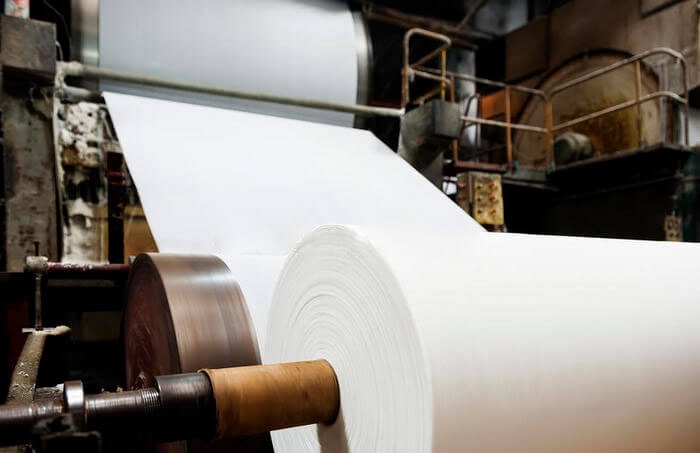
Optical brighteners play a critical role in modern papermaking by significantly improving whiteness, brightness, and visual appeal. Originally developed for the textile industry, optical brighteners—also known as fluorescent whitening agents (FWAs)—have become indispensable additives in paper manufacturing as technologies and quality requirements have advanced.
Today, optical brighteners are widely used in pulp treatment, surface sizing, and coating applications to achieve high whiteness levels without compromising paper strength or process efficiency.
Why Optical Brighteners Are Needed in Papermaking
During pulping and bleaching, most lignin is removed from cellulose fibers. However, even after chemical bleaching, trace amounts of residual lignin, pigments, and impurities remain in the pulp. These components impart a yellowish or grayish tone to the paper.
Traditional methods for increasing paper whiteness include:
- Chemical bleaching
- Addition of dyes or pigments
- Use of strong oxidizing agents
While these methods can improve brightness to some extent, they have notable drawbacks. Excessive bleaching can damage fiber strength and reduce paper durability, while pigments and dyes often provide limited and unstable whitening effects.
The introduction of optical brighteners in paper has made it possible to achieve high whiteness through a combined bleaching and optical whitening approach, offering superior performance with minimal negative impact on pulp properties.
Working Principle of Optical Brighteners in Paper
The whitening mechanism of optical brighteners in paper is based on fluorescence. These compounds absorb invisible ultraviolet (UV) radiation, typically in the 300–400 nm range, and re-emit it as visible blue-violet light in the 420–480 nm range.
Because paper fibers naturally exhibit a yellowish hue, the emitted blue-violet fluorescence neutralizes the yellow tone through complementary color compensation, resulting in a brighter and visually whiter appearance.
This optical effect is consistent across different papermaking stages, including:
- Pulp whitening
- Surface sizing
- Surface coating
Key Functions of Optical Brighteners in Paper
The effectiveness of optical brighteners is primarily reflected in two technical aspects:
1. Enhancement of Pulp Fiber Whiteness
Optical brighteners effectively counteract the yellowish tint of chemically bleached pulp fibers. This allows manufacturers to achieve higher whiteness levels without resorting to harsher bleaching conditions that may weaken fiber structure.
2. Whitening of Papermaking Additives
In addition to pulp fibers, optical brighteners improve the appearance of:
- Sizing agents
- Fillers
- Binders and functional additives
- White pigments used in coatings
By eliminating the inherent yellow tone of these materials, optical brighteners contribute to a more uniform and higher overall paper whiteness.
Advantages of Using Optical Brighteners in Paper
Compared with traditional whitening methods, optical brighteners offer several significant advantages:
- High efficiency at low dosage, reducing material consumption
- No damage to pulp fibers, preserving paper strength and performance
- Easy application across multiple papermaking stages
- Superior visual brightness and appeal not achievable by bleaching or dyes alone
For these reasons, optical brighteners have become a standard and indispensable tool in the production of high-whiteness paper grades, including printing paper, writing paper, coated paper, and specialty papers.
Conclusion
Optical brighteners have transformed modern papermaking by enabling higher whiteness levels through optical enhancement rather than aggressive chemical treatment. By neutralizing yellow tones in pulp fibers and papermaking additives, they deliver bright, clean, and visually appealing paper while maintaining fiber integrity.
As market demand for premium-quality paper continues to grow, optical brighteners will remain a key technology for achieving optimal whiteness, efficiency, and product competitiveness.
At Shandong Grand Chemical Co., Ltd., we specialize in producing and supplying a wide range of high-performance optical brighteners for plastics, coatings, detergents, and textiles.
📩 Contact us for product data sheets, samples, or technical guidance:
Email: sales@obachemical.com
WhatsApp: +86 13173009832