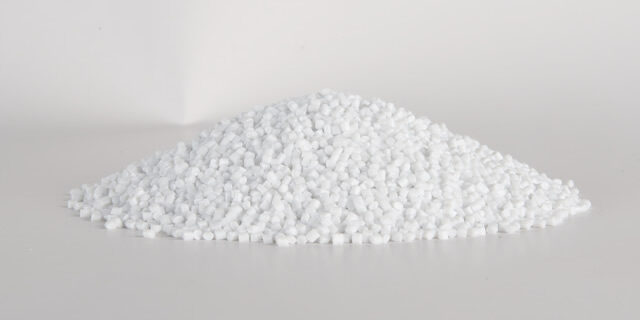
Polyamide (PA), widely known as nylon, is a high-performance thermoplastic resin characterized by repeating amide linkages —[NHCO]—. As one of the most important engineering plastics, polyamide is used extensively across fibers, films, and injection-molded components. It is classified into three main categories: aliphatic PA, aliphatic–aromatic PA, and aromatic PA, with aliphatic polyamides being the most commercially significant due to their broad range of grades and processing versatility.
Although widely valued for strength, toughness, and chemical resistance, polyamide products—especially injection-molded components—often exhibit yellowing, dullness, or uneven coloration due to high processing temperatures and raw-material impurities. To address these appearance issues, manufacturers rely on optical brighteners for Polyamide to enhance whiteness, brightness, and visual quality.
This article provides a technical overview of optical brighteners for PA materials, explains selection principles, and highlights why optical brightener OB-1 is considered the industry’s most suitable solution for nylon processing.
1. Why Polyamide Needs Optical Brighteners
Polyamide materials are processed at high melt temperatures starting at 280°C. At such temperatures, slight oxidation, thermal degradation, and monomer residues can cause the final product to appear:
- Yellowish
- Dull or grayish
- Lacking in brightness or uniformity
For applications such as electrical components, consumer goods, automotive parts, and premium engineering products, achieving excellent whiteness is essential.
This is where a high-performance optical brightener for Polyamide becomes crucial. When used correctly, optical brighteners:
- Increase luminance and whiteness
- Mask inherent yellow tones
- Improve color uniformity
- Enhance perceived material quality
- Boost brand and product competitiveness
2. The Challenge: High Processing Temperatures in Polyamide
Unlike PVC, PE, or PP, polyamide is processed under significantly higher temperatures—typically 280–320°C, depending on grade and reinforcement.
Most common optical brighteners—such as OB, FP-127, ER, KCB, and KSN—have decomposition points around 200–250°C, making them unsuitable for nylon applications. When exposed to temperatures above their decomposition limit, these brighteners:
- Lose whitening effectiveness
- Carbonize, producing ash
- Cause grayish or black spots
- Result in inconsistent product appearance
Therefore, the key factor when choosing an optical brightener for Polyamide is the decomposition temperature.
3. Why Optical Brightener OB-1 is the Best Choice for Polyamide
Among all brighteners available on the market, optical brightener OB-1 is widely recognized as the optimal solution for PA resin due to its superior thermal stability and high-temperature endurance.
Key Technical Advantages of OB-1
✓ 1. Ultra-High Decomposition Point (360°C)
OB-1 remains stable far above the processing temperatures of nylon.
Its 360°C decomposition point ensures that whitening performance is preserved during injection molding and extrusion.
This prevents problems such as:
- Ashing
- Discoloration
- Decomposition residue
- Brightness loss
✓ 2. Excellent Whitening Efficiency
OB-1 delivers strong blue-violet fluorescence that effectively offsets nylon’s natural yellowish tint, producing:
- High-purity whiteness
- Sharp brightness
- Clean, uniform color results
✓ 3. Outstanding Weather & UV Resistance
Nylon products—especially outdoor functional parts—must endure UV radiation and environmental fluctuations.
OB-1 offers:
- Long-term UV stability
- Resistance to yellowing
- Minimal fading or discoloration
This makes it suitable for outdoor structural components, electrical housings, and molded products requiring consistent long-term appearance.
✓ 4. Exceptional Cost-Effectiveness
Compared with other high-performance brighteners:
- OB-1 costs ~50% less than OB
- OB-1 costs ~67% less than KCB
- OB-1 significantly reduces scrap rates
- OB-1 enhances production efficiency
For nylon processors, this combination of lower cost + better performance delivers clear economic advantages.
4. Typical Applications of OB-1 in Polyamide
OB-1 is suitable for applications requiring both high whiteness and high thermal resistance, including:
- Nylon injection-molded parts
- Engineering plastic components
- Electrical housings and connectors
- Nylon fibers, filaments, and monofilaments
- Automotive interior/exterior nylon components
- High-performance PA66 reinforced materials
Its thermal stability and excellent weather resistance make it the top choice for engineering-grade nylon products.
5. Conclusion
Choosing the right optical brightener for Polyamide is essential for achieving superior product quality and visual performance. While many brighteners cannot withstand the high processing temperatures of nylon, optical brightener OB-1 stands out with its:
- 360°C decomposition point
- Excellent whitening efficiency
- Strong UV/weather resistance
- Outstanding cost-performance ratio
For nylon manufacturers seeking improved appearance, stable production, and reduced costs, OB-1 is the most reliable and widely used solution.
At Shandong Grand Chemical Co., Ltd., we specialize in producing and supplying a wide range of high-performance optical brighteners for plastics, coatings, detergents, and textiles.
📩 Contact us for product data sheets, samples, or technical guidance:
Email: sales@obachemical.com
WhatsApp: +86 13173009832